Small larvae.
Bigger possibilities.
Build a BSF system around your animals, your market and the organic materials you can source. From your first batch to a better-managed farm, start with a clear plan.
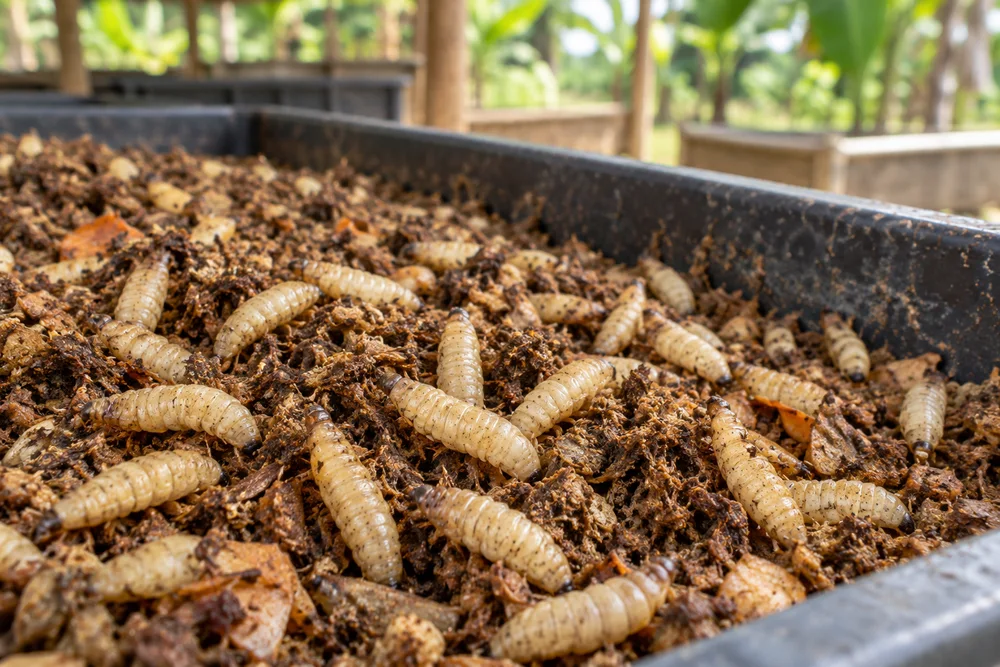
KNOW YOUR INPUTS.
GROW WITH A PURPOSE.Illustrative image · BSF larval production
GROW WITH A PURPOSE.Illustrative image · BSF larval production
YOUR FARM. YOUR STARTING POINT.
Where are you with BSF?
First time here, growing already, or trying again? There’s a practical next step for you.
01 / START WITH THE OUTCOME
What do you want BSF to do for your farm?
A feed project, a breeding business and an organic-material operation need different plans.
Begin with your feeding plan.
Tell us your animals, their stage and your existing ration. Assess the role of BSF as a feed ingredient with qualified guidance; do not replace a balanced feed by guesswork.
Discuss this plan02 / STOCK, SUPPLIES & SUPPORT
Build the right start for your BSF farm.
Explore starter stock, practical equipment and services. We confirm current availability, specification and the full quotation with you before payment.
Starter stock
BSF eggs
Plan a fresh start with incubation guidance and collection arrangements.
Ask for a quote Starter stockLive BSF larvae
Discuss your production or feeding purpose, quantity and handling needs.
Ask for a quote Starter stockBSF pupae / breeding stock
Plan colony replacement or a breeding start with the team.
Ask for a quoteA PLAN THAT FITS YOUR FARM
Tell us what you need.
No online payment is taken here. Send your details once; we’ll review stock, quantities, transport and the right next step.
Training dates and farm demonstrations are arranged with the team. Ask for current fees, scope and availability.03 / KNOW THE LIFE CYCLE
One insect. Different jobs at every stage.
Black Soldier Fly, commonly called BSF, is Hermetia illucens. Understanding the stages helps you separate breeding from production.
EGGS
Protect the beginning of your next batch.
Record the source and collection details. Prepare the nursery before the eggs arrive, and follow the handling instructions supplied with your stock.
Do not guess hatch success from egg weight. Record what actually hatches.
Ask about this stage04 / PLAN BEFORE YOU SCALE
Useful tools. Clearer decisions.
Explore your own numbers. These tools plan space and costs; they do not predict hatch rates, yields or profits.
SPACE-PLANNING SCENARIO
How many trays could I need?
Assume one newly loaded batch each day, with each tray loaded once for its full cycle. Replace the illustrative values with a loading plan agreed for your system.
ILLUSTRATIVE EQUIPMENT SCENARIO110 trays
- New trays loaded / day
- 10
- Active trays
- 100
- Reserve trays
- 10
- Racks at your configuration
- 6
Does not size a breeding colony, predict larvae output or establish a safe feed-loading rate. Confirm airflow, access, tray specification and actual space.
Review my planKeep the story of every batch.
Download a blank CSV for inputs, tray IDs, observations, harvests and costs. Opens in Excel or Google Sheets.
05 / YOUR PRACTICAL BSF STARTER GUIDEUnderstand the system.
Understand the system.
Build your confidence.
Work through these six foundations, then ask for guidance on your own inputs, site and production goal.
01Choose your production goal
+
Decide whether you want larvae for a suitable feeding plan, eggs and breeding stock, or a product for a confirmed buyer. Each objective needs a different setup.
- Define the product or farm use first.
- Confirm who needs it, in what form and quantity.
- Start at a scale you can observe and manage.
02Assess inputs before buying equipment
+
Record material type, source, supply consistency, collection cost, storage and contamination risks. Keep unsuitable or unknown material out of feed production.
- Keep hazardous, chemical-contaminated and sewage inputs out.
- Review input suitability and applicable requirements.
- Separate receiving and preparation from clean handling areas.
03Design the flow of your farm
+
Plan receiving, preparation, nursery, grow-out, harvest and processing areas. Breeding and egg collection need their own managed environment.
- Leave working space, airflow and cleaning access.
- Plan drainage, containment and handling.
- Keep source and batch identification through the process.
04Manage breeding and nursery separately
+
Treat eggs, young larvae and adult breeding as different management stages. Confirm handling guidance for the stock supplied and observe what happens in your own system.
- Record egg source and collection information.
- Prepare the nursery before stock arrives.
- Retain a planned breeding allocation rather than harvesting everything.
05Harvest for the product you want
+
Separate material destined for harvest, processing or breeding. Record weights, source batches and intended use; fresh and dried products need separate handling and cost comparisons.
- Use dedicated, clean handling equipment.
- Confirm processing, storage and quality requirements.
- Do not treat larvae from arbitrary waste as automatically safe animal feed.
06Give residue its own plan
+
Frass and remaining substrate are not automatically a ready-to-use fertiliser. Assess stabilisation, testing, storage and the intended use before marketing or applying them.
- Keep residue linked to its source batch.
- Discuss any composting or further processing required.
- Avoid unsupported nutrient or fertiliser claims.
Want to go deeper?
Ask for the BSF farming guide and the right training pathway for your experience.
06 / HELP WHEN YOU NEED IT
Something changed in your BSF system?
Start with observations. These checks help you explain a problem; they do not diagnose its cause.
Larvae dying or escaping+
- Record the affected stage, input batch and recent changes.
- Check temperature, moisture, drainage and crowding.
- Keep a suspect batch separate and ask the team to review photos and records.
The system feels too hot+
- Measure substrate and ambient temperature if you can.
- Check direct sunlight, ventilation, tray depth and rack spacing.
- Share readings, photos and recent loading changes before adding more material.
Eggs not hatching+
- Check collection, transport and handling information.
- Record the nursery conditions and what you have observed.
- Contact the supplier with the batch details; do not assume every unhatched batch has the same cause.
Strong smell or wet material+
- Inspect drainage, moisture and the condition of inputs.
- Check how much material was added and what remains.
- Keep suspect material out of the feed chain while the cause is assessed.
Slow growth or uneven trays+
- Compare input batches, loading and dates.
- Check temperature, moisture, access to material and handling.
- Use actual harvest records to compare performance rather than visual size alone.
Low egg production+
- Record adult emergence, colony age and egg collection.
- Check light, enclosure conditions, access and collection setup.
- Discuss your breeding replacement plan and observations with the team.
07 / LEARN. SEE. BUILD.
Practical support for your next step.
Talk through the format, scope, dates and fees with our team.
BSF training
Breeding, inputs, grow-out, harvesting, records and the economics of your system.
Plan with our teamPlan a farm visit
Ask about BSF demonstration availability and arrange a visit to Olturoto, Kitengela.
Plan with our teamDesign & setup
Review your site, input stream, production zones, trays, racks and breeding needs.
Plan with our team08 / MORE WAYS TO GROW YOUR FEED OPTIONS
Build a broader feed plan.
BSF is one option. Explore complementary on-farm ingredients and fodder around your animals, water, land and actual costs.
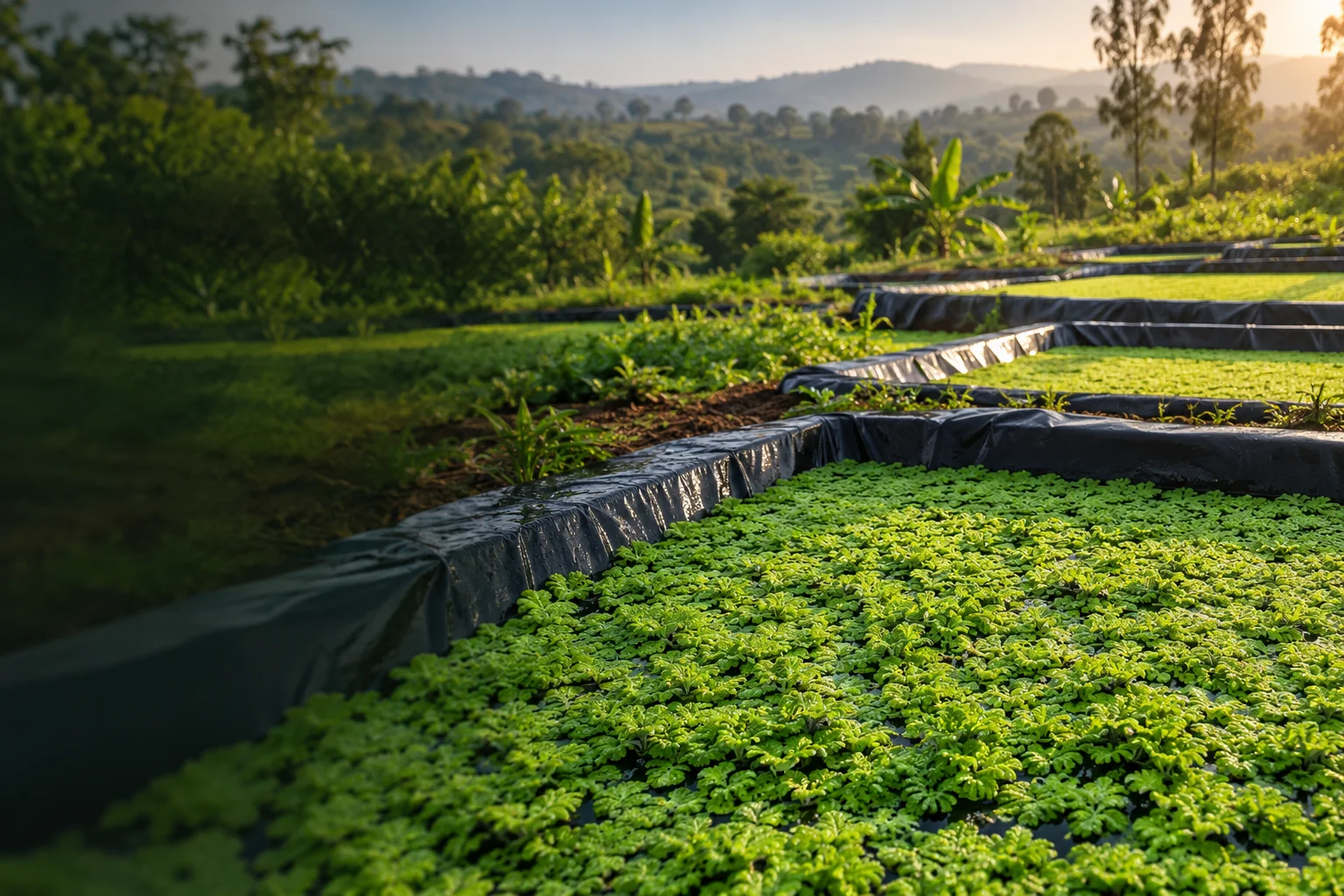
Azolla & Duckweed
Start with living cultures, a growing guide and package support.
Explore this option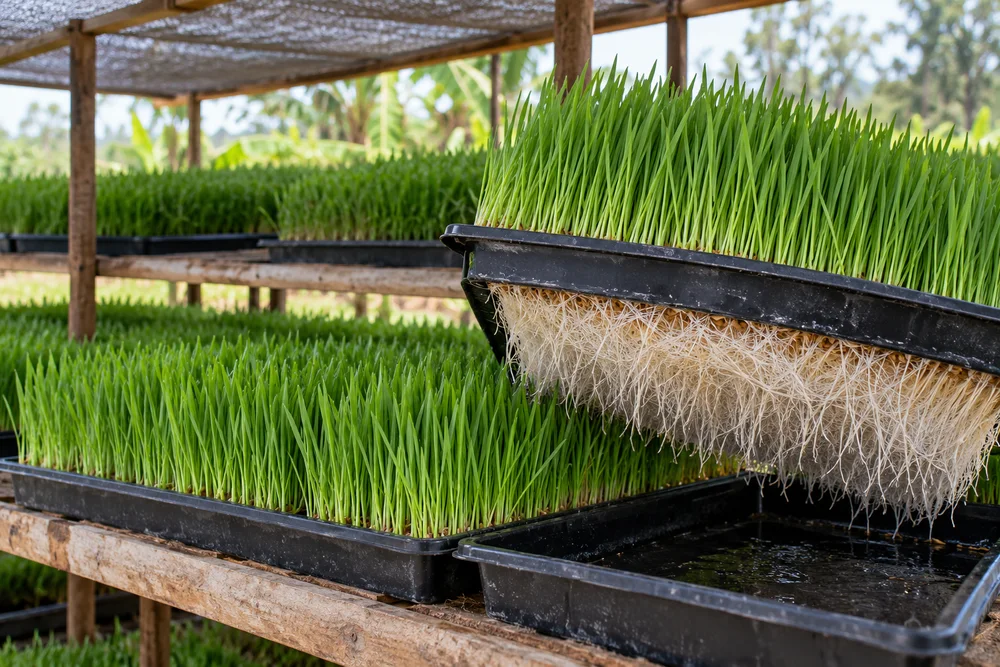
Hydroponic fodder
Explore tray-grown fodder and compare seed, water, labour and dry matter.
Explore this option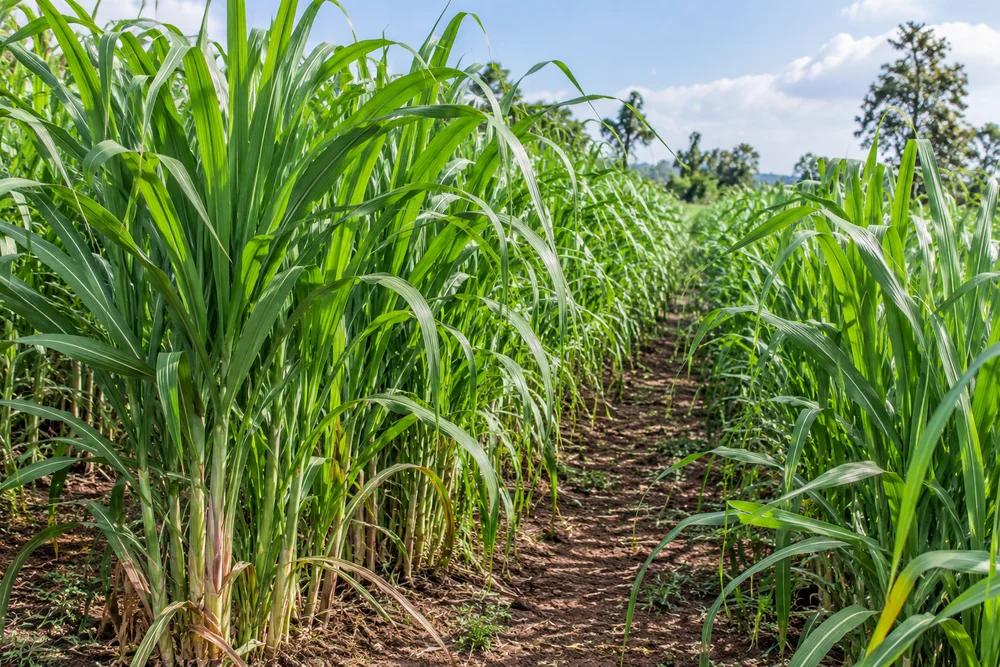
Super Napier
Explore planted fodder for a suitable cut-and-carry feeding system.
Explore this optionIllustrative images. Compare dry matter, nutrient quality and the full cost of production; no single ingredient automatically replaces a complete ration.
09 / MORE FROM DEMI FARMS
Keep learning. Keep moving forward.
10 / A FEW USEFUL ANSWERS
Before you take the next step.
What should I buy first?+
Start with your objective, a suitable input stream and a prepared production area. The right eggs, larvae, breeding stock and equipment depend on the system you intend to run. Ask the team to review your plan before ordering.
Can I pay for BSF stock online?+
BSF stock and services are quoted with the team on WhatsApp. Confirm current availability, specification, delivery and payment arrangements before paying. The Azolla packages have their own existing secure checkout.
How quickly will larvae grow or eggs hatch?+
Timing and performance depend on the stock, inputs, environment and handling. Follow batch-specific instructions and record actual observations; no hatch or yield guarantee is made here.
Can I feed any organic waste?+
No. Assess source, composition, contamination and applicable requirements. Hazardous material, chemicals, sewage and unknown contaminated inputs must not be treated as suitable animal-feed inputs.
Will BSF automatically cut my feed bill?+
Compare all production, collection, transport, labour and processing costs, and seek a suitable feeding plan. Fresh and dried products have different weights and nutrient concentrations; savings are not guaranteed.
What should I do with frass?+
Keep residue traceable and discuss stabilisation, testing and intended use. Material left after harvesting is not automatically a ready-to-use fertiliser.
Let’s build your next
BSF possibility.
Tell us where you are, what you want to produce and the materials you have. We’ll help you find the next practical step.
+254 768 494 209 · Helping Farmers Succeed